Ninety days. Locked scope. Shipped product.
Every engagement runs the same three-phase sequence: define, build, ship. Milestones are visible from day one. No late-stage pivots, no scope theater.
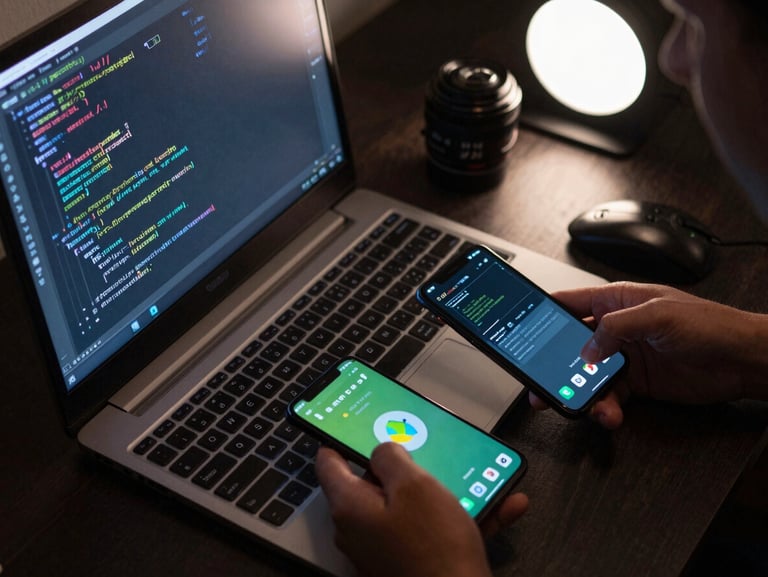
Define: scope locked in week one
We run a structured kickoff to map every feature, screen, and integration. Constraints are named openly. Once signed off, scope does not move — that discipline protects your timeline and budget.
Build: production-grade from the first commit
Architecture decisions are made for the shipped product, not the demo. We test on real devices across the fragmentation matrix throughout — not as a final QA pass.
Ship: milestone by milestone, no surprises
Releases follow a fixed cadence. You see every milestone before it closes. The final build goes to the Play Store on the date we set in week one — that date does not slip.
What founders ask before signing
Can scope change after kickoff?
Will the code need a rewrite after launch?
What if three months isn't enough?
No. Scope is agreed and signed at the end of Phase 01. Changes require a new statement of work. Visible constraints keep decisions clean and timelines honest.
No. Every build is production-grade from the first commit. We don't retrofit quality at the end — architecture for scale is decided before a line of code is written.
That's a scoping problem, not a timeline problem. We size the first release to fit a real 90-day build — then ship it. Subsequent phases extend from a stable, shipped base.